



What We Believe
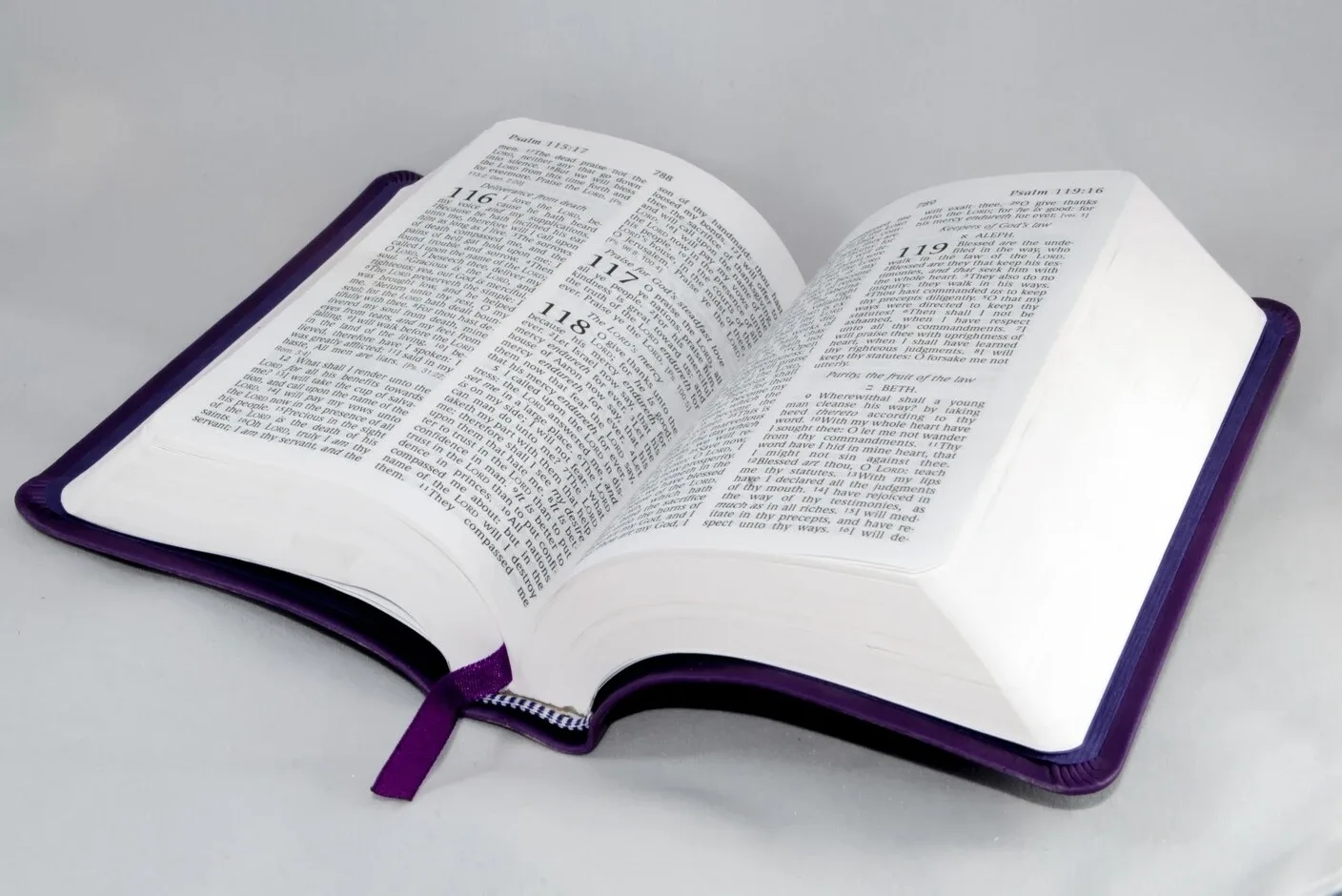
Reducing the essence of the Church of Christ’s beliefs to a few sentences is impossible, because every single line of the Holy Scriptures is, for us, an inseparable part of what we believe and uphold. There are, however, certain truths revealed by the Gospel that we feel duty-bound to reaffirm because they are ignored by many. We invite you to explore them further through personal Bible study.
All those who today sincerely seek to do God’s will cannot help but wish, together with us, to return to worshipping God in accordance with the teachings contained in that magnificent book, the Bible.
Every single word found in the Bible is the result of God’s inspiration. As they unknowingly contributed to the writing of this magnificent book, the men who wrote it were guided by God; the stories and teachings it contains are what God wanted to leave us in order to guide us toward salvation. It must therefore be ruled out that any instruction given through the Holy Scriptures could simply be the product of the mentality of the period in which it was written.
Morality evolves and attitudes change, but God’s will remains constant over time.
SALVATION IS THE RESULT OF GRACE AND ACTIVE FAITHWhatever we do, we can never earn the salvation that the Lord has granted us. Jesus died on the cross to give us salvation, provided that we accept it and place our faith in him.
What has just been said does not mean that we can simply sit back and watch life slip through our fingers, because, as the apostle Paul says in his Letter to the Galatians, chapter 5, verse 6:
Faith, then, is what leads us to act with the strength provided by love; it is the only thing that has real value in God’s eyes. True faith acts, makes a commitment and takes risks. A fruitless faith is not faith.
The apostle Paul, writing to the Hebrews, says:
Paul therefore links faith inseparably to the action that demonstrates it, as though they were one and the same thing.
BAPTISM AS AN ESSENTIAL STEPJesus says in the Gospel of Mark, chapter 16, verse 16:
These two things are therefore important: believing and being baptized.
It is essential to respect the order indicated in this passage: first believe and, consequently, be baptized. Baptism is the first tangible and conscious sign of obedience to Christ and, together with faith and repentance, leads to the forgiveness of sins committed.
All the examples of baptism found in the Bible concern adults who first believe in Jesus and then decide to be baptized.
Believing in the importance of baptism does not mean denying salvation by faith, but obeying God through faith and believing what the apostle Paul taught the Romans and wrote in his epistle:
To be saved, we must die with him through baptism. This is its purpose: to unite us symbolically with his death and resurrection.
To understand the meaning of this passage, it is important to know that the word “baptize,” in the Greek language through which the New Testament was transmitted to us, means “to immerse.” Baptism, therefore, as it was practiced by the first believers, involves the complete immersion of the body; it is thus easier to understand how it can be compared to a burial.
An apparently obvious statement conceals a profound truth and leads to a question: how can Christ be made King?
The Bible presents a first-century Church guided by revelations inspired by God and given to the apostles. The apostles spread these revelations through correspondence, direct contact and the Gospels. Nothing in the Bible clearly tells us that one apostle had received from God a leadership role over the other apostles; nothing in the Bible tells us that one apostle had been held in greater esteem than the others during his earthly life. Above all, nothing tells us that the authority exercised by the apostles was transferable from one person to another throughout the centuries.
Anyone who approaches the Bible will notice how the apostles’ sacrifice resulted in a book filled with God’s wisdom, capable of answering the questions of every age and providing a way to salvation that requires no additional truths or human traditions.
Jesus speaks clearly in the Gospel of Mark, chapter 7, verses 6 to 9:
To make Christ King, it is therefore necessary to reject every spiritual authority that is not Christ himself, listening for his voice as it emerges from every passage of the Bible.
WE ARE ALL PRIESTSThe apostle Peter writes in his epistle:
After the coming of Jesus, our relationship with God no longer requires men who enjoy a privileged relationship with him and act as mediators. As Peter teaches, we are all called to be a holy and royal priesthood, a holy people.
Being priests means living out faith as a fundamental part of our lives and not regarding it as something reserved for “priests.” The Scriptures assign Christians different roles, but we are all called to be active parts of one body and never mere spectators of the faith lived out by others.
The most dangerous trap into which we can fall is accepting the role of “spectators” and giving up our place as an integral part of God’s magnificent design.
MAN DESERVES NEITHER WORSHIP NOR VENERATIONThe entire Bible tells the story of humanity, which continually directs its attention toward idols of every kind. Throughout the centuries, God intervenes and punishes humanity for its unfaithfulness. Exodus 20:4 says:
Sculptures and images are symbols of betrayal not in themselves, but because of the way people use them, placing their hopes and aspirations in them. Could venerating the image of a “saint” and addressing him or her in prayer be a mistake? Absolutely!
However good a person may have been during his or her life, and however much he or she may have worked for the good of others, no one deserves the attention that we must reserve exclusively for God.
Turning to a man or woman defined as a “saint” to express our concerns and hopes means denying God’s presence in our lives and his desire to be near us at all times.
In the first letter that Paul wrote to Timothy, chapter 2, verse 5, we read:
Jesus is therefore our mediator, the one through whom we can speak to God and call him “Father,” without the need for any additional mediation.